


PrEP (Generic Truvada)
$86.94
PrEP is effective at preventing the transmission of HIV in HIV-negative persons.
Delivery & Privacy
- Fast next‑day delivery to get your products as soon as possible.
- All items are packaged discreetly to maintain your privacy.
What is PrEP (Generic Truvada) used for?
PrEP (pre-exposure prophylaxis) is a prescription medicine used to reduce the risk of contracting HIV in HIV-negative persons who are at a greater risk of contracting the virus.
In studies, PrEP is over 90% effective at preventing HIV transmission in HIV-negative persons when used correctly.
Your dosage of PrEP may change based on how frequently you have sex and how far in advance you plan on having sex. You should discuss this with your doctor to find the most effective method of taking PrEP for you.
You don’t need to take PrEP for the rest of your life. You only need to take it while your risk of contracting HIV remains high. Those in a monogamous relationship do not need to take PrEP.
You can get PrEP online from United Pharmacy Shop trusted online pharmacy. All medicines are dispatched from our USA and UK pharmacy in discreet packaging to ensure your privacy is protected.
How does PrEP work?
The two ingredients of PrEP (Tenofovir and Emtricitabine) inhibit an enzyme needed by HIV to develop and replicate. As a result, the chances of becoming infected with HIV are greatly reduced.
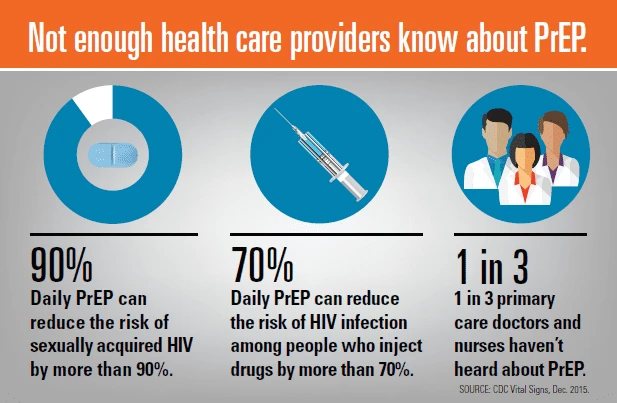
When taken daily, PrEP can reduce the risk of HIV transmission via sex by more than 90% transmission and via injectable drug use by up to 70%.
Please note that PrEP does not protect against other unwanted sexually transmitted diseases, such as chlamydia, gonorrhoea and syphilis. Condoms should be used every time you have sex while using PrEP to prevent the spread of other STDs.
While PrEP can reduce the risk of contracting the virus, it does not treat those who are already HIV positive.
Before using PrEP, it is important to know your HIV status by taking a HIV blood test.
While taking PrEP, it is important to get tested for HIV regularly to ensure that you remain HIV-negative.
Taking PrEP while HIV positive may reduce the effectiveness of HIV treatments later on.
Who can take PrEP?
PrEP is for those who have an increased risk of contracting HIV, including:
- Men who have sex with men (gay and bisexual men)
- Cisgender women who have sex with men who have sex with men
- Transgender women
- People who have unprotected sex with persons who have lived or travelled in areas with a high prevalence of HIV
- People who inject drugs and share equipment used to take recreational drugs
- People who have sex with people who inject drugs and share equipment used to take drugs
HIV can be transmitted through semen, vaginal fluids, blood (including menstrual blood) and anal fluids. It is important to always practise safe sex and use condoms to prevent the spread of HIV and other STIs.
The eligibility criteria may vary depending on your location. Your doctor will be able to determine whether you are at an increased risk of HIV and provide further information on ways to protect yourself from contracting the virus.
PrEP is not necessary if you are in a monogamous relationship with someone who is HIV positive but has an undetectable viral load.
PrEP for men
Men at an increased risk of HIV include:
- Men who have sex with men (gay and bisexual men).
- Men with an HIV-positive partner or whose partner’s HIV status is not known.
- Men with multiple partners.
- Men whose partner has multiple partners.
Safe sex should be practised to prevent the spread of STIs, including HIV.
Men who engage in unprotected receptive anal sex are at a higher risk of contracting HIV than those who do not. Cuts in the mouth or anus (anal fissure) can also increase your risk of contracting the virus during unprotected sex. The NHS recommend wearing condoms every time you have sex, and using a water-based lubricant during anal sex to prevent damage to the skin.
PrEP has been tested to be safe in men. No adverse effects on male fertility have been noticed in men taking PrEP short-term or long-term.
PrEP for women
Women at an increased risk of HIV include:
- Women who have sex with bisexual men and transgender women.
- Women with an HIV-positive partner or whose partner’s HIV status is not known.
- Women with multiple partners.
- Women whose partner has multiple partners.
It is important to always practise safe sex by using condoms to prevent STIs and unwanted pregnancies. The NHS recommend using water-based lubricants to prevent friction which may lead to anal or vaginal tearing, and prevent condoms from breaking.
PrEP does not affect fertility in females or interact with hormonal contraceptive pills. Moreover, PrEP is safe to take by women who are trying to conceive, are pregnant or breastfeeding.
If you are planning on having a baby while taking PrEP, it is important to speak to your doctor for further advice on reducing your risk of getting HIV.
It is important for women to undergo regular testing for HIV, especially during pregnancy, to ensure they remain HIV-negative while taking PrEP.
PrEP for transgender women
Transgender women at an increased risk of HIV include:
- Transgender women who have unprotected sex with bisexual and transgender men.
- Transgender women with an HIV-positive partner or whose partner’s status is not known.
- Transgender women with multiple partners.
- Transgender women whose partner has multiple partners.
For transgender women, the NHS recommend using water-based lubricants to prevent friction during anal and vaginal sex, which might cause tearing of the skin or condoms. This also further reduces the risk of getting HIV and other STIs.
PrEP does not interact with hormone replacement therapy being used by transgender women and is not known to affect fertility. If you are concerned about taking PrEP while taking feminising hormones, speak to your doctor.
How to take PrEP
There are two ways of taking PrEP, though, for most people, it is recommended to take PrEP once a day to prevent HIV.
Daily dosing
PrEP should be taken once daily to reduce the risk of contracting HIV.
Take one pill at the same time every day, accompanied by a glass of water. If you have trouble swallowing tablets, you can crush them and mix them with 100ml of water or juice, then drink them immediately.
This medicine is effective after 7 days of consecutive daily use.
Missing a dose of PrEP may increase your risk of contracting HIV.
On-demand PrEP
You can also take PrEP on-demand during a time when you believe you will be exposed to the virus. On-demand PrEP is taken in the following order:
- Take two tablets between 2 and 24 hours before you plan on having sex.
- Take one tablet 24 hours after having sex.
- Then take another tablet 24 hours after that (48 hours after sex).
Further information on dosing
Consult with your doctor to determine the most suitable PrEP dosing regimen for you. Depending on the risk involved, one method may be preferable over another.
PrEP side effects
All medications carry the risk of side effects. Always read the patient information leaflet enclosed with your medication. Only take medicine as prescribed.
You can view the patient information leaflet for PrEP online.
Some common side effects of PrEP include:
- Headache
- Diarrhoea
- Dizziness
- Sleeping problems
- Back pain
This is not an exhaustive list of side effects. Further information regarding the safety of PrEP can be found in the patient information leaflet, which comes enclosed with your medication.
If you experience any side effects after taking PrEP, regardless of whether they are listed above or in the patient information leaflet, please inform your doctor immediately.
If you experience dizziness as a result of taking PrEP, avoid driving or using machinery until you feel safe to do so.
Pregnancy and breastfeeding
If you are pregnant, suspect you are pregnant or plan on becoming pregnant, or you are breastfeeding, speak to your doctor before taking this PrEP.
PrEP is not a form of contraception and does not prevent unwanted pregnancies.
Women taking PrEP should use contraception to avoid pregnancy.
Other cautions
Always read the patient information leaflet that accompanies your treatment before starting PrEP.
Please inform our doctor of any medicines you are currently taking, including those prescribed or
While PrEP is effective at preventing HIV, it does not protect you against other sexually transmitted infections, such as chlamydia or syphilis.
Always practise safe sex while taking PrEP by using condoms every time you have sex.
Do not use PrEP past the expiry date printed on the packaging. The date refers to the last day of the specified month. For example, “EXP: 03/2025” means the 31st of March 2025.
Never throw away medicine via household or water waste. Take any unwanted or expired medicine to your pharmacy and ask them to dispose of it safely on your behalf.
Always store medicine out of sight and out of reach of children and pets.
Never share your medicine with anybody else, even if they are experiencing the same symptoms or have the same condition as you.
Knowing Your HIV Status with PrEP
When it comes to Pre-Exposure Prophylaxis (PrEP), knowing your HIV status holds significant importance. While PrEP is highly effective in preventing HIV transmission when used correctly, it is not foolproof. That’s why regular HIV testing is essential, empowering you to make informed decisions about your sexual health.
By knowing your HIV status, you can confidently continue taking PrEP if you test negative, knowing that you are protected from acquiring the virus. It serves as a vital tool for monitoring your health and detecting any potential signs of HIV infection at an early stage.
Testing for HIV while on PrEP is critical for identifying breakthrough infections, albeit rare. Although PrEP significantly reduces the risk, there is a small possibility of acquiring HIV due to factors like inconsistent medication adherence or drug interactions. Timely detection of a breakthrough infection enables immediate medical intervention and adjustment of treatment plans, thereby ensuring optimal health outcomes.
Moreover, being aware of your HIV status empowers you to take control of your sexual health and engage in open conversations with your healthcare provider. Regular testing and discussions about your PrEP regimen help establish a comprehensive care plan that addresses your concerns and questions, ensuring a personalised approach to your care. It also opens doors to additional support and resources tailored to your specific needs.
Remember, integrating regular HIV testing into your healthcare routine is crucial, especially if you are using PrEP. It empowers you to make informed decisions, safeguards your well-being, and ensures a proactive approach to your sexual health. Take charge of your health and embrace the power of knowing your HIV status with PrEP. For convenient and reliable HIV self-testing options, explore our range of OraQuick HIV Self-Test Kits.
Frequently asked questions
What should I do if I forget to take PrEP?
If you forget to take PrEP, take it as soon as you remember.
If it is nearly time for your next dose, skip the missed dose and take the next dose at the regular time.
Do not take more PrEP to make up for a missed dose.
What should I do if I accidentally take too much PrEP?
If you accidentally take too much PrEP, consult your doctor or visit your nearest emergency department for assistance.
Keep the bottle with you so that the doctors know what you’ve taken.
Can you drink alcohol while taking PrEP?
Drinking alcohol may increase your risk of side effects, such as nausea. It is recommended to avoid drinking excessive amounts of alcohol while taking PrEP.
Is PrEP safer than condoms?
While PrEP is effective at preventing HIV infections, it does not prevent other sexually transmitted infections such as gonorrhoea, syphilis or chlamydia. Therefore, condoms should be used to reduce the risk of getting other sexually transmitted infections.
Moreover, PrEP is not a contraceptive option and does not prevent pregnancy. You should use another form of birth control to prevent pregnancy while taking PrEP.
How long do I have to take PrEP for it to become effective?
Currently, it is not clear exactly how long PrEP takes to work. There have been studies which have shown PrEP to reach its peak efficacy in the blood at 20 days. Other studies have shown PrEP to be effective after 7 days of consecutive use.
Are HIV and AIDS the same?
No, HIV and AIDS are not the same.
HIV is the name of the transmissible virus.
AIDS is a collection of complications and other diseases which occur when HIV is left to damage the body long-term without treatment.
People with AIDS can still carry and pass on HIV, but AIDS is a non-communicable disease which cannot be passed on.
Is PrEP the same as PEP?
Pre-Exposure Prophylaxis (PrEP) is not the same as Post-Exposure Prophylaxis (PEP).
PrEP is used to prevent HIV before potential exposure to the virus, while PEP is used to prevent HIV within 72 hours after potential exposure to the virus.
PrEP and PEP are not interchangeable and should not be used interchangeably. For further information on how to use PrEP and PEP safely, speak to your doctor.
Neither PrEP nor PEP can protect you against other STIs or unwanted pregnancies. It is important to always wear a condom during sex to prevent the spread of STIs.
Where can I get PrEP online in the USA and UK?
You can order PrEP online from our USA and UK-registered pharmacy, United Pharmacy Shop.
Related products


Reviews
There are no reviews yet.