


Colchicine
Colchicine found renewed relevance in modern medicine. This alkaloid, extracted from the autumn crocus plant (Colchicum Autumnale), has been used for centuries to alleviate various ailments, with its primary role being the treatment of gout and related conditions.
Delivery & Privacy
- Fast next‑day delivery to get your products as soon as possible.
- All items are packaged discreetly to maintain your privacy.
How Does Colchicine Work to Treat Gout?
Gout occurs when uric acid crystals accumulate in the joints, causing inflammation and pain. Typically, your body processes uric acid and excretes excess amounts of it. In gout, this process is disrupted, leading to crystal formation.
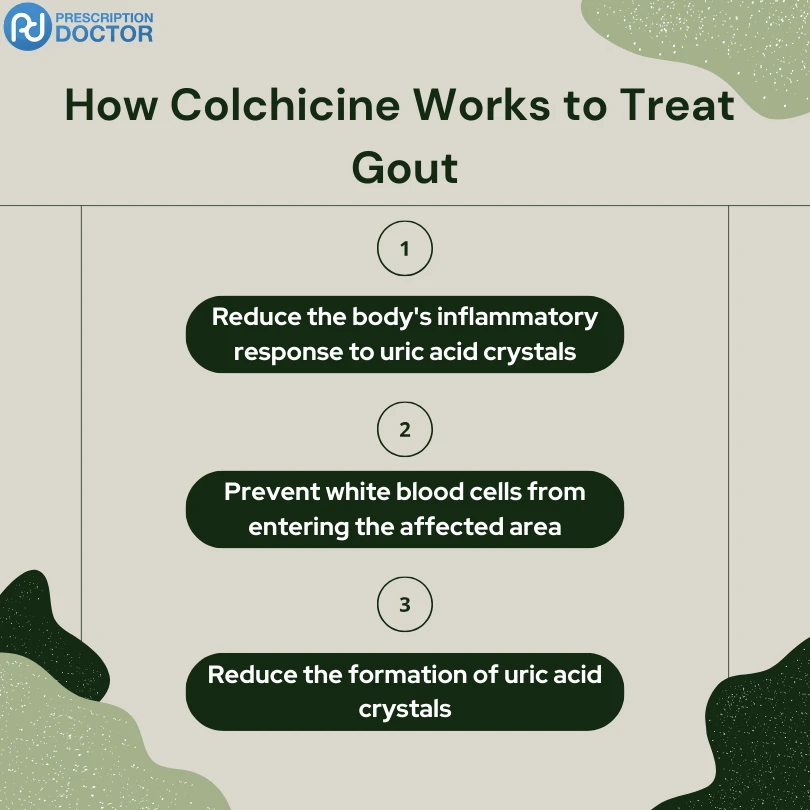
Together, these mechanisms help alleviate pain and swelling associated with gout attacks.
How Much Colchicine Do I Need to Take for Gout?
The exact dosage of Colchicine you’ll need depends on whether you’re treating an acute gout attack or using it for prevention.
For Acute Gout Attacks
When you feel a gout attack coming on, here’s what you should do:
- Take 1mg of Colchicine (usually two 0.5mg tablets) at the first sign of an attack.
- Follow this with 0.5mg (one tablet) an hour later.
- Remember, don’t take more than 1.5mg in a single course of treatment.
- If you need another course, wait at least 3 days before starting again.
Starting treatment promptly can make a big difference. The sooner you begin taking Colchicine when you notice symptoms, the better your chance of reducing the severity and duration of your gout attack.
For Preventing Gout Attacks
If you’re using Colchicine to prevent gout attacks, you’ll typically take 0.5mg once or twice daily. Consistency is key to effective gout prevention. Try to take your prescribed dose at the same time each day. This helps maintain a steady level of the medication in your system.
Note: It’s essential to understand that Colchicine has a “narrow therapeutic index.” This means the difference between effective and potentially harmful doses is small. Follow dosage instructions exactly and never take more than the amount instructed.
How Can I Get Colchicine?
Colchicine is a prescription-only medication. At United Pharmacy Shop, we make accessing the medicines you need simple and discreet.
We offer a quick and easy online consultation service. Just complete a short health questionnaire, and our qualified doctors will assess whether Colchicine is right for you.
If approved, we’ll ship your Colchicine tablets in plain packaging straight to your door as soon as the next working day. No GP appointments or pharmacy trips are required.
Is Colchicine Right For Me?
As with any medication, Colchicine may not be suitable for everyone. You shouldn’t take Colchicine if you:
- Have an allergy to Colchicine or any of the other ingredients
- Have severe kidney or liver problems
- Are taking certain medications that interact with Colchicine
- Are pregnant or breastfeeding (unless advised by your doctor)
If you have certain conditions like blood disorders, heart disease, or digestive system problems, you may also need to use Colchicine with caution.
What Side Effects Can Colchicine Cause?
Most people tolerate Colchicine well, especially at lower doses. However, like any medicine, some people may experience side effects. Some of the more common side effects can include nausea, vomiting, diarrhoea, abdominal pain, and loss of appetite. These are usually mild and often improve as your body adjusts to the medication.
It’s reassuring to know that Colchicine has a long history of safe use. For example, one study published in the American Journal of Medicine analysed over 50 years of Colchicine evidence and found that long-term use (0.5 mg daily) is safe for most people and doesn’t seem to increase the risk of health problems.
Rare Side Effects
In rare cases, Colchicine may cause more serious adverse effects, such as:
- Muscle weakness or pain
- Numbness or tingling in fingers or toes
- Unusual bleeding or bruising
- Severe diarrhoea or vomiting
- Signs of infection (fever, chills, sore throat)
- Unusual tiredness or weakness
Seek urgent medical attention if you experience any of these serious symptoms.
Colchicine Drug Interactions
Colchicine can interact with many medications, including some antibiotics, antifungals, and heart medications. Some key interactions to be aware of include:
- Certain antibiotics like clarithromycin and erythromycin
- Antifungal medications
- Heart medications such as diltiazem and verapamil
- HIV medications
- Statins used to lower cholesterol
- Grapefruit or grapefruit juice, which can increase colchicine levels in your blood
This list is not exhaustive; always consult a doctor or pharmacist before starting any new medication while taking Colchicine.
Related products


Reviews
There are no reviews yet.