
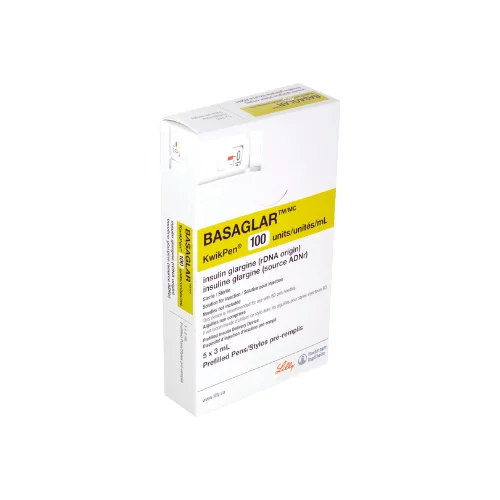
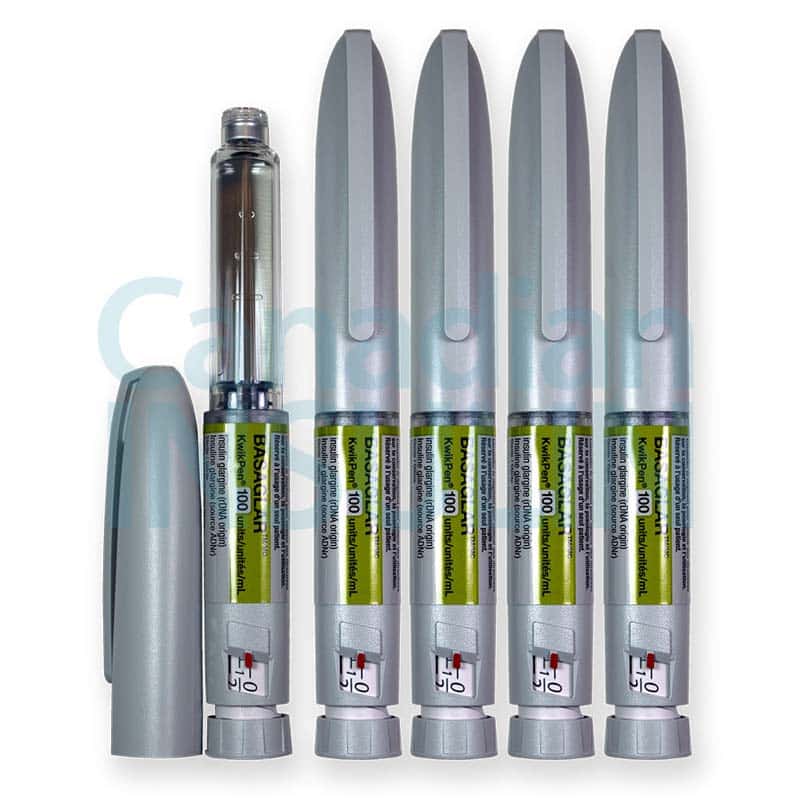
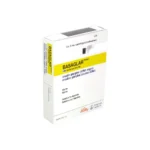

Basaglar KwikPen 100 U/mL 5×3 mL
$109.99
Delivery & Privacy
- Fast next‑day delivery to get your products as soon as possible.
- All items are packaged discreetly to maintain your privacy.
Basaglar KwikPen is a prefilled long-acting insulin glargine U-100 pen used as basal insulin (background insulin) to help control blood glucose in diabetes. The pen format can be simpler than drawing insulin from a vial, but product selection still depends on matching the device, concentration, and quantity written by the prescriber.
Basaglar KwikPen Available Options
| Detail to compare | Why it matters |
|---|---|
| Strength | Confirm 100 units/mL or U-100 if that is what was prescribed. |
| Pen count | Check whether the listing shows one pen, a Basaglar KwikPen 5 pack, or another quantity. |
| Device type | KwikPen, cartridge, and Tempo Pen formats are not interchangeable at checkout. |
| Access path | Basaglar KwikPen price without insurance may be handled differently than coverage-based payment. |
The Long Acting Insulin collection can help you view related basal insulin presentations without treating them as automatic substitutes. Your selected product should match the prescription, including the device name and concentration.
How to Order This Pen Online
Start by selecting the pen presentation that matches your prescription order. Keep the prescriber’s name, the written directions, and any requested patient details available so the order can be checked efficiently. Prescription details may be confirmed with the prescriber when needed.
Before checkout, compare the displayed quantity with how the prescription is written. Some people are prescribed a quantity in pens, while others see total mL or total units on their paperwork. The order must match the prescribed product rather than an estimated monthly need.
If cash-pay access is being considered, compare the selected listing and any coverage information before submitting personal details. For orders involving US shipping from Canada, keep the receiving address and temperature-sensitive package plan current. Refrigerated insulin should be opened promptly on arrival and checked before use.
Why Customers Choose a Prefilled Basal Insulin Pen
This listing is most useful when your clinician has prescribed insulin glargine in a prefilled pen and you want to compare current product details in one place. It brings together the product form, strength language, quantity checks, and handling reminders that matter before an online order.
Prefilled pens reduce the need to measure insulin with a separate syringe. They still require compatible pen needles, correct injection technique, and safe sharps disposal. If your prescription names a cartridge instead, select the matching format rather than substituting a pen on your own.
Quick tip: Check whether needles are included or need to be ordered separately.
What This Long Acting Insulin Is Used For
This medicine contains insulin glargine, a long-acting insulin analog designed to provide steady basal insulin coverage. It is used to improve blood glucose control in adults and children with type 1 diabetes and in adults with type 2 diabetes, according to labeled use. It is not intended to treat diabetic ketoacidosis, which requires urgent medical care.
Basal insulin works differently from rapid-acting mealtime insulin. It helps cover background insulin needs over many hours, while rapid-acting products are usually tied to meals or correction dosing. That distinction matters when comparing insulin listings, because two pens can look similar while serving different parts of a diabetes regimen.
Condition pages for Type 1 Diabetes and Type 2 Diabetes can help organize related diabetes resources. They should not replace a clinician’s instructions for which insulin, device, or dose to use.
Strength, Pack Details, and Dosing Information
The clinically important strength for this pen is 100 units/mL. That concentration tells you how many insulin units are in each milliliter, not how many units to inject. Basaglar KwikPen U-100 wording, a Basaglar 100 units/mL pen label, and insulin glargine pen language all refer to the product identity you should match against the prescription.
Dosing directions are individual and should come from the prescriber. The label describes once-daily administration at the same time each day, but your dose amount and timing may be different when a clinician is adjusting therapy. Do not change the dose, skip doses, or switch insulin products without clinical guidance.
When the product is supplied as a Basaglar KwikPen box of pens, the pack count helps estimate how long the order may last under the written directions. It does not define the dose. Compare total contents with prescribed daily units, remaining supply at home, and any travel plans that could affect storage.
This pen is not designed for mixing with other insulins or drawing insulin into a syringe. Do not dilute it, and do not transfer the insulin from the pen into another device. Using the wrong device or concentration can cause serious dosing errors.
Injection sites commonly include the abdomen, thigh, or upper arm, with rotation to reduce skin changes. People who are new to pens may need training on priming, attaching needles, dialing the dose, injecting, and disposal. The focused How To Use Basaglar KwikPen resource can support a technique conversation with a diabetes clinician.
Storage, Shipping, and Pen Handling
Unopened pens are generally kept refrigerated at 36°F to 46°F (2°C to 8°C). They should not be frozen, exposed to heat, or stored in direct light. If insulin has been frozen, overheated, cloudy, colored, or contains particles, do not use it.
After first use, the pen is kept at room temperature below 86°F (30°C) and discarded after 28 days, even if insulin remains. Keep the cap on when the pen is not in use. Do not store the pen with a needle attached, because this can lead to leakage, blocked needles, or air entering the cartridge.
Because this is temperature-sensitive insulin, cold-chain shipping may be used to protect the product during transit. Inspect the package as soon as it arrives. Look for damage, signs of freezing, or insulin that is not clear and colorless before placing it into routine storage.
Travel adds extra handling steps. Keep insulin away from checked luggage temperatures, heaters, car glove compartments, and direct sunlight. Carry backup supplies, pen needles, glucose monitoring materials, and the prescription label if a clinician or travel authority requests proof of therapy.
Why it matters: Storage problems can reduce insulin reliability before the first injection.
Safety Checks Before Using This Insulin
The main safety risk with any insulin is hypoglycemia (low blood sugar). Symptoms can include sweating, shaking, fast heartbeat, hunger, headache, confusion, irritability, or weakness. Severe hypoglycemia can cause seizures, loss of consciousness, or death, so follow the treatment plan your clinician gave for lows.
Do not use this insulin during an episode of hypoglycemia or if you have had a serious hypersensitivity reaction to insulin glargine or any ingredient in the pen. Seek urgent care for trouble breathing, swelling of the face or throat, widespread rash, or severe dizziness after an injection.
Other possible side effects include injection-site redness, itching, swelling, skin thickening or pits from repeated injections, weight gain, fluid retention, and allergic reactions. Low potassium, called hypokalemia, can occur with insulin and may be serious in people at higher risk. Your clinician may monitor potassium if other medicines or health conditions make that relevant.
Never share an insulin pen, even if the needle is changed. Sharing pens can transmit blood-borne infections. Use a new needle for each injection, remove it after use, and place used needles in an approved sharps container.
Interactions and Monitoring to Discuss
Insulin needs can change when other medicines are started, stopped, or adjusted. Corticosteroids, some diuretics, certain antipsychotics, thyroid medicines, and beta-agonists may raise blood glucose. Other medicines, including some diabetes drugs, ACE inhibitors, and salicylates, may increase the chance of low blood sugar.
Beta-blockers and similar medicines can make warning symptoms of hypoglycemia harder to notice. Alcohol can also affect glucose control and may increase the risk of lows. Bring an updated medication list to appointments, including over-the-counter products and supplements.
Thiazolidinediones (TZDs), a class of diabetes medicines, can cause or worsen fluid retention when used with insulin. Report new shortness of breath, rapid weight gain, or swelling promptly, especially if you have heart failure risk.
Monitoring is part of safe insulin use. Your clinician may ask for blood glucose logs, continuous glucose monitor data, A1C results, injection-site checks, or kidney and liver health information. These details help guide therapy without guessing from symptoms alone.
Illness, changes in food intake, increased exercise, missed meals, or travel across time zones can alter insulin needs. Do not adjust basal insulin on your own to solve a short-term change. Contact your care team if readings are repeatedly outside the range they set for you.
Compare With Related Options
Related products can be useful when your prescriber names a different device or when the prescription changes. They are not automatic replacements. Concentration, pen mechanics, cartridge compatibility, needle use, and labeled instructions can differ even within the same insulin class.
If your paperwork specifies cartridges rather than a prefilled pen, compare the separate Basaglar Cartridges listing. If your clinician prescribed another insulin glargine pen, the Lantus Solostar Pens page can help you check device and concentration details before discussing any switch.
Some comparisons focus on onset, duration, or insurance placement, but the safest product decision starts with the exact written prescription. A long acting insulin pen should not be swapped for rapid-acting insulin, premixed insulin, or a different concentration unless the prescriber has changed the plan.
Related products




Reviews
There are no reviews yet.