

Utrogestan
$43.99
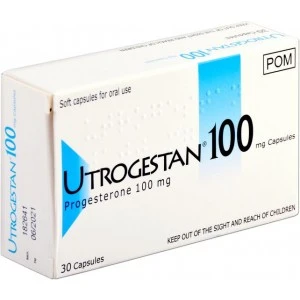
Utrogestan is a type of hormone replacement therapy (HRT) for postmenopausal women. It contains body-identical progesterone, also known as micronised progesterone, meaning it has the same structure as the progesterone your body naturally produces. Utrogestan is taken alongside oestrogen and helps to protect the womb lining from thickening and treat menopause symptoms.
Delivery & Privacy
- Fast next‑day delivery to get your products as soon as possible.
- All items are packaged discreetly to maintain your privacy.
What Is Utrogestan?
Utrogestan is a brand of hormone replacement therapy (HRT) for menopause. It contains a body-identical progesterone, which should be used alongside an oestrogen-based HRT to protect the womb lining from thickening and reduce the risk of womb (uterine) cancer. Together, oestrogen and progesterone HRT are used to relieve symptoms of the menopause in women who have not undergone a hysterectomy, so still have a womb.
Utrogestan is available as a soft capsule, and each one contains 100 mg of micronised progesterone. It can help to manage hot flushes, night sweats, and anxiety in combination with oestrogen HRT, such as patches.
How Does Utrogestan Work for Menopause?
Menopause involves hormonal changes that lead to the reduction of natural sex hormones, affecting ovulation and the shedding of the endometrium. Common symptoms include:
- Difficulty concentrating
- Difficulty sleeping
- Headaches
- Hot flushes
- Joint pain
- Recurrent UTIs
- Reduced muscle mass
- Reduced sex drive
- Vaginal dryness
During menopause, the natural levels of oestrogen and progesterone decline, resulting in many of the classic signs and symptoms mentioned above. Research shows that by replacing declining progesterone levels, micronised progesterone (Utrogestan) helps prevent the womb lining from becoming too thick and may alleviate some menopause symptoms, such as sleep disturbances.
When taken alongside oestrogen, Utrogestan 100 mg capsules can also help reduce the extra risk of endometrial (womb) cancer that can occur with oestrogen-only HRT.
Utrogestan is not a type of contraceptive, so if it is less than 12 months since your last period or you are under 50 years old, you may still need additional contraception to stop you getting pregnant. At Prescription Doctor, we can help find the right contraception method for you and can provide:
- Condoms
- Combined oral contraceptive pill
- Mini pill
- Vaginal ring
- Combined contraceptive patch
If you think you may need emergency contraception, our clinician can also prescribe the morning-after pill.
Why Are Oestrogen and Utrogestan Used Together?
Oestrogen and Utrogestan are used together as a form of combined hormone replacement therapy to treat menopause symptoms in people who still have a womb, i.e., have not had an operation to remove their womb (hysterectomy). The main reason for this combined method is to protect the lining of the womb.
Oestrogen is the main hormone used to prevent symptoms such as hot flushes, night sweats, and vaginal dryness, but it causes the womb lining to thicken. If the womb lining becomes too thick and is not shed, it increases the risk of developing womb or endometrial cancer. One study found that the risk of womb cancer in postmenopausal individuals with a thickened endometrium is 1.178 times higher compared to a control group.
How Effective Are Utrogestan Capsules?
Adding Utrogestan to an oestrogen HRT effectively lowers the risk of endometrial cancer in people who still have a womb during menopause. One study found that adding progesterone HRT for more than 25 days per month reduces the risk to levels lower than those seen in non-hormone users.
Another study found that 300 mg of progesterone, a dose far higher than the prescribed 100 to 200 mg of Utrogestan, can effectively reduce menopausal hot flushes and night sweats by 55% and improve sleep.
Utrogestan 100mg: How to Use
Utrogestan is available as 100 mg soft capsules that you swallow whole with a glass of water. You should take Utrogestan at bedtime and without food, and at the same time as your oestrogen HRT.
The usual dose of Utrogestan is 200 mg per day at bedtime. This means you will usually need to take 2 capsules together. Utrogestan is only taken for 12 days during the last half of each menstrual cycle. Sometimes a doctor may prescribe 100 mg of Utrogestan at bedtime every day from days 1 to 25 of each cycle.
To take Utrogestan, you need to:
- Take two capsules at bedtime on days 15 to 26 of your 28-day cycle.
- After this, you will usually have a few days of withdrawal bleeding, similar to a period, but you should continue to take your oestrogen HRT every day.
- If you have any issues with the withdrawal bleed, your doctor may change the way you take Utrogestan to reduce the amount of withdrawal bleeding you have.
What to Do if You Forget to Take Utrogestan
If you forget to take a dose of Utrogestan, take it as soon as you remember. If it is almost time for your next dose, skip the missed dose and take the next one at the usual time. Do not take a double dose to make up for a missed dose.
What If I Take More Utrogestan Capsules Than Necessary?
If you take too much Utrogestan, you may feel drowsy, dizzy, sleepy, or tired. Contact your doctor if you have taken more Utrogestan than you have been prescribed or if you get any of these symptoms. In an emergency, go to your nearest hospital for medical help, and make sure you take the medicine pack with you so a doctor can see what you have taken.
Utrogestan Side Effects and Cautions
Understanding the risks associated with taking this medication is important before taking it. If you have any concerns about Utrogestan side effects, speak to a doctor or pharmacist.
Utrogestan 100mg Side Effects
Like all medications, Utrogestan can cause side effects in some people, but not everyone will get them. Because Utrogestan contains a body-identical form of progesterone, meaning it is chemically identical to the natural hormone produced by the body, it often leads to fewer side effects compared to older synthetic types.
Possible Utrogestan side effects include:
| Common Side Effects (may affect up to 1 in 10 users) |
Uncommon Side Effects (may affect up to 1 in 100 users) |
Rare Side Effects (may affect up to 1 in 1,000 users |
Very Rare Side Effects (may affect up to 1 in 10,000 users) |
|---|---|---|---|
| Weight changes Insomnia Feeling tired or dizzy Headaches Stomach swelling or pain Nausea Itching Irregular periods of bleeding between periods Vaginal bleeding Breast pain Missing or absent periods Feeling generally unwell |
Problems due to the formation of blood clots in blood vessels Fluid retention Anxiety or agitation Lack of interest or energy Depression Disorientation Mood swings Nervousness Memory loss Migraine Numbness, tingling, pins and needles Speech disorder Fainting Vision changes Abnormal menstrual cycle Breast discomfort or tenderness Excessive hair |
Changes in glucose tolerance Changes in libido (sex drive) Eye irritation Loss of appetite Painful urination |
Tan or dark skin discolouration Allergic reactions |
It’s important to note that the above is not an exhaustive list of Utrogestan 100mg side effects. More detailed information can be found within the Patient Information Leaflet that comes with the medication.
If you get any Utrogestan side effects, you should report them to your doctor or the Medicines and Healthcare products Regulatory Agency Yellow Card Scheme.
Utrogestan Cancer Risk
Taking oestrogen-only HRT can increase the risk of excessive thickening of the womb lining and endometrial cancer in women who still have a womb. Utrogestan is taken with oestrogen HRT to help protect against this extra risk by making you shed the womb lining. Combined HRT may still carry other risks, so discuss your individual benefits and risks with a clinician.
Breast Cancer
Utrogestan is used alongside oestrogen in menopausal women, and this type of HRT may slightly increase the risk of breast cancer. For example, in women aged 50 to 79 who:
- Are not taking HRT: On average, 9 to 17 in 1000 will be diagnosed with breast cancer over a 5-year period
- Are taking an oestrogen-progesterone HRT: Over 5 years, there will be 13 to 23 cases in 1000 users or an extra 4 to 6 cases
However, the evidence can be mixed. Some research shows that taking oestrogen with micronised progesterone does not increase breast cancer risk for up to 5 years of treatment.
Ovarian Cancer
Although ovarian cancer is rare, there is a slightly increased chance of getting it in people who take oestrogen-only or combined oestrogen-progesterone HRT. For example, in women aged 50 to 54 who:
- Are not taking HRT: About 2 in 2000 will be diagnosed with ovarian cancer over a 5-year period
- Have been taking HRT for 5 years: Around 3 in 2000 users will be diagnosed with ovarian cancer
That means that there will be approximately 1 extra case of ovarian cancer in the HRT group compared to those not taking HRT.
Utrogestan Blood Clot Risk
HRT users are at a 1.3 to 3 times higher risk of blood clots in a vein, especially in the first year, compared to non-HRT users. For example, in women in their 50s who are not taking HRT, over a 5-year period, 4 to 7 out of 1000, on average, will get a blood clot in a vein. In comparison, for the same age group who have taken combined HRT for 5 years, 9 to 12 out of 1000 users will get a blood clot.
There are some factors that can increase the chance of a blood clot in a vein, including:
- Being unable to walk for a long time because of surgery, illness, or injury
- Being seriously overweight (a body mass index above 30)
- Having a blood-clotting issue that requires medication
- Having a close relative who has had a blood clot in the leg, lung, or any other organ
- Having systemic lupus erythematosus (SLE)
- Having cancer
If any of these apply to you, you must speak to your clinician before starting Utrogestan, as it may not be suitable for you.
Utrogestan Interactions and Warnings
Utrogestan is not suitable for everyone. Some medical conditions and medications may make it unsuitable for you. It is important to check the patient information leaflet before taking Utrogestan to ensure you do not have a medical condition or are taking a medicine that may interact with Utrogestan.
Do not take Utrogestan if you:
- Are allergic to progesterone, soya, peanuts, or any other ingredients listed in the medication
- Have ever had breast cancer
- Have oestrogen-sensitive cancer, such as endometrial cancer
- Have unexplained vaginal bleeding
- Have excessive thickening of the womb lining (endometrial hyperplasia)
- Have or have ever had a blood clot in a vein, such as in the legs or lungs
- Have a blood-clotting disorder
- Have recently had a disease caused by blood clots in the arteries, such as a heart attack, stroke, or angina
- Have or have ever had liver disease, and your liver function tests have not yet returned to normal
- Have a rare blood problem called porphyria
- Have bleeding on the brain (cerebral haemorrhage)
- Are breastfeeding
Tell the clinician during your consultation about any medical conditions you have, including any that aren’t listed here, so they can check if Utrogestan is right for you.
Utrogestan Interactions
Before taking Utrogestan, tell the clinician about any prescribed, over-the-counter, or herbal medications you are taking. This will help them ensure that Utrogestan is safe for you to take, as some medications can interact with Utrogestan and make it less effective or potentially unsafe.
Tell the clinician if you are taking any of the following medicines:
- Blood thinners, such as coumarins or phenindione
- Ciclosporin or tacrolimus
- Tizanidine
- Bromocriptine
- Selegiline
- Diazepam, chlordiazepoxide, alprazolam, oxazepam, or lorazepam
- Tuberculosis medications, such as rifampicin and rifabutin
- Antibiotics
- Phenytoin, phenobarbital, carbamazepine, eslicarbazepine, oxcarbazepine, primidone/rufinamide, perampanel, or topiramate
- St John’s Wort
- Darunavir, nelfinavir, fosamprenavir, or lopinavir
- Bosentan
- Fluconazole, itraconazole, voriconazole, or ketoconazole
- Atorvastatin or rosuvastatin
- Aprepitant
You should also let the clinician know if you have recently been given an anaesthetic or if you have recently been tested for liver or hormone problems.
When to Take Care with Utrogestan and HRT
Before starting Utrogestan, inform your clinician about any medical conditions or risks you have, as they may worsen while taking HRT. You may also need more frequent check-ups.
Tell the clinician if any of the following apply to you:
- Abnormal tumours/growths (fibroids inside your womb)
- Growth of the womb lining outside your womb (endometriosis) or a history of excessive growth of the womb lining (endometrial hyperplasia)
- Increased risk of developing blood clots
- Increased risk of getting an estrogen-sensitive cancer (such as having a mother, sister or grandmother who has had breast cancer)
- High blood pressure
- Liver problems, such as a benign liver tumour
- Diabetes
- Gallstones
- Migraine or severe headaches
- A disease of the immune system that affects many organs of the body (systemic lupus erythematosus, SLE)
- Epilepsy
- Asthma
- A disease affecting the eardrum and hearing (otosclerosis)
- A very high level of fat in your blood (triglycerides)
- Fluid retention due to cardiac or kidney problems
- Hereditary and acquired angioedema
- You have ever had depression
- Your skin is sensitive to light (photo-sensitivity)
You can find more information in the Patient Information Leaflet that is provided with your medication.
Utrogestan During Pregnancy and Breastfeeding
Do not take Utrogestan if you are pregnant, think you might be pregnant, plan on becoming pregnant, or are breastfeeding.
Utrogestan is not a contraceptive. If you become pregnant while taking Utrogestan, stop taking the medicine and consult your doctor immediately.
If you are under 50, or if it has been less than 12 months since your last period, you should use additional forms of contraception, such as condoms, to prevent pregnancy while taking Utrogestan.
Where Can I Buy Utrogestan in the USA and UK?
Utrogestan is a prescription-only medication, which means a clinician must approve it for you before you can take it. You will need a short consultation to ensure it is safe for you to take, based on your medical history, whether you get it on the NHS or via a private prescription.
Can I Buy Utrogestan Over the Counter?
No, Utrogestan is not available over the counter; you need a prescription from a qualified clinician.
Is Utrogestan on the NHS?
Yes, Utrogestan is available on the NHS, and is usually prescribed alongside oestrogen for menopausal women who still have their womb intact. You will need to make an appointment with your GP to find out if Utrogestan is available in your area and if it is suitable for you.
Can I Buy Utrogestan Online?
Yes, you can get Utrogestan online from Prescription Doctor after completing a short online health questionnaire for our clinician to assess. It cannot be bought without a consultation or a valid prescription. At Prescription Doctor, we can provide a prescription and dispatch your medication to your home address as part of our regulated service.
Frequently Asked Questions About Utrogestan 100mg Capsules
Can You Take Utrogestan Without Oestrogen?
Can You Take Utrogestan Vaginally?
If you are interested in taking Utrogestan vaginally, you will need Utrogestan vaginal capsules, which are specifically designed to be inserted inside the vagina. Vaginal capsules are usually used for IVF, but some clinicians may prescribe Utrogestan vaginal capsules if there is a shortage of the oral capsules, or a 200 mg strength may be a suitable alternative.
At Prescription Doctor, we cannot provide vaginal capsules for taking Utrogestan vaginally. Instead, the capsules we provide are for oral use only.
When Do You Bleed on Utrogestan?
You will usually get a withdrawal bleed a few days after you finish taking the capsules, often around day 27 or 28 of a 28-day cycle. It will usually appear as a light period or spotting. However, it is common to experience irregular bleeding or spotting in the first 3 to 6 months of starting HRT.
If you are concerned about bleeding while taking Utrogestan, speak to your clinician for more advice.
Is Utrogestan a Progesterone?
Is Utrogestan Body Identical?
Is Gepretix the Same as Utrogestan?
Does Utrogestan Cause Weight Gain?
Weight changes are listed as a common Utrogestan side effect, affecting up to 1 in 10 people who take it. However, there is no conclusive evidence that Utrogestan causes weight gain. Many people gain weight around the time of the menopause, but this may be caused by hormone changes, age-related metabolism shifts, or temporary fluid retention rather than the medication.
Adopting a healthy lifestyle, such as eating a calorie-controlled, balanced diet, getting regular exercise, and prioritising sleep, can help you maintain a healthy weight.
How Long Should I Take Utrogestan For?
It’s common to take HRT for 2 to 5 years to treat menopause symptoms, but sometimes you may need to take it for longer. The duration depends on individual circumstances and medical advice, including the age at which you started menopause.
For example, if you enter the menopause before the age of 40, known as premature menopause, or before the age of 45 (early menopause), you’ll usually be advised to take HRT until you are at least 51, which is the average age of menopause in the UK.
How Do I Stop Taking Utrogestan?
What Should I Do if I Experience Utrogestan Side Effects?
Most Utrogestan side effects are mild and temporary and will usually improve within 3 to 6 months as your body gets used to the medication. It is advisable to take Utrogestan on an empty stomach before bed to reduce the risk of side effects.
If you experience any side effects that are severe or difficult to manage, consult your doctor immediately. Side effects can include dizziness, headaches, and yellowing of the skin and eyes (jaundice).
What Precautions Should I Take While Using Utrogestan?
If you have a history of blood clots, high blood pressure, or liver problems, consult your doctor before starting Utrogestan, as it may not be suitable for you, and you may need regular check-ups.
If you have any concerns about taking Utrogestan, speak to a clinician before taking it.
Related products





Reviews
There are no reviews yet.