
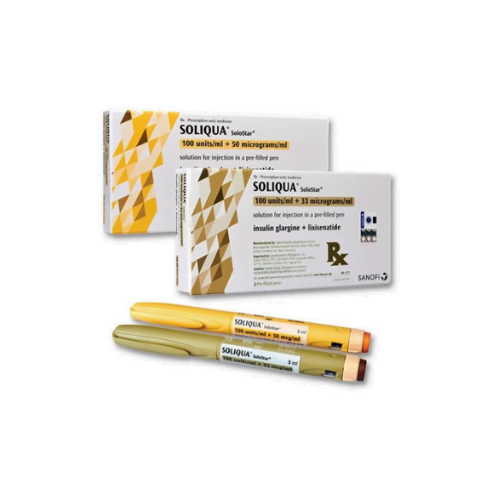
Soliqua Solostar Pens
€254.21
Delivery & Privacy
- Fast next‑day delivery to get your products as soon as possible.
- All items are packaged discreetly to maintain your privacy.
What Soliqua Is and How It Works
Border Free Health connects U.S. patients with licensed Canadian partner pharmacies; prescriptions are verified with prescribers before dispensing.
This medicine pairs a long-acting basal insulin with a GLP-1 receptor agonist. The insulin supports steady background control, while the incretin component helps the body release insulin when glucose rises after meals and slows stomach emptying. Together, the combination targets fasting and after-meal numbers with one daily injection.
Insulin glargine/lixisenatide 100/33 pens are used with diet and activity for better glucose management in adults who need more than a single agent. It is injected once daily within the hour before the first meal of the day. Do not mix it with other insulins or use it in an insulin pump.
Who It’s For
This treatment is for adults with T2D who are not adequately controlled on basal insulin or on a GLP-1 receptor agonist alone. It is not for type 1 diabetes or diabetic ketoacidosis. It should not be used with another GLP-1 receptor agonist at the same time.
People with severe stomach problems, such as gastroparesis, should avoid it. Those with a history of pancreatitis, significant kidney issues, or serious allergic reactions to any component should discuss risks with a clinician. Review your other conditions and all medicines during your consultation.
To explore broader therapy options and education, you can review our resources on Type 2 Diabetes and browse the Diabetes Care category.
Dosage and Usage
Use this pen once daily within the hour before your first meal. Starting dose and adjustments depend on prior insulin or GLP-1 use. Your prescriber will set the initial dose and a titration plan based on fasting glucose. Do not share pens or needles. Rotate injection sites in the abdomen, thigh, or upper arm to reduce skin problems.
The Soliqua 15-60 units dosing pen delivers a fixed-ratio combination across a defined range. After dialing your dose, inject subcutaneously and hold the needle in the skin for the time recommended in the official instructions. Do not administer two doses on the same day. When uncertain, follow the approved label or ask your clinician.
For background reading on basal insulins and schedules, see Long Acting Insulin and Different Types Of Insulin.
Strengths and Forms
This therapy is supplied as SoloStar prefilled disposable pens. Each pen contains 3 mL of solution in a fixed ratio of insulin glargine 100 units/mL and lixisenatide 33 mcg/mL. Boxes often include multiple pens; availability can vary by pharmacy partner.
Soliqua prefilled injection pens are color-coded and designed for daily single-patient use. Your prescriber will specify pen strength and the dose range appropriate to your needs. Always confirm the carton and pen label before first use.
Missed Dose and Timing
If you miss a dose, inject the next scheduled dose before your first meal on the following day. Do not take an extra dose or increase the dose to make up for a missed injection. Try to keep a consistent routine with morning administration to support steady results.
Storage and Travel Basics
Unopened pens should be kept refrigerated as directed on the label and never frozen. Protect pens from heat and light. Once in use, store the pen at recommended room temperature for the labeled in-use period, and then discard it even if some solution remains. Do not leave a needle attached between injections.
For trips, keep pens and supplies in your carry-on, with a copy of your prescription or a travel letter. Use a travel case to avoid temperature extremes. Partner pharmacies maintain temperature-controlled handling when required. Keep all medicines out of children’s reach.
To learn about pen types and travel-friendly tips, read Types Of Insulin Pen.
Pen Handling and Sharps Disposal
Before each injection, read the instructions for use that come with the pen. Inspect the solution; do not use if you see particles or discoloration. Attach a new sterile needle, prime per the device guide, dial the prescribed dose, and inject into recommended sites.
- New needle each time: reduce contamination and clogging.
- Correct technique: pinch if advised, insert, and hold to ensure full dose.
- Remove needle: detach right after the injection to prevent leaks.
- Safe disposal: place used needles in an approved sharps container.
- Local rules: follow community guidance for sharps drop-off or mail-back.
Never share a pen or needle with anyone, even if the needle is changed.
Benefits
This combination can simplify care by covering fasting and after-meal glucose with one daily injection. It may reduce the number of separate injections and pens you manage. The fixed ratio supports coordinated action without juggling two devices. Many people appreciate having a single routine aligned to breakfast.
Side Effects and Safety
- Gastrointestinal effects: nausea, vomiting, diarrhea, and decreased appetite.
- Injection-site issues: redness, itching, or mild swelling.
- Headache or dizziness: usually mild and transient.
- Upper respiratory symptoms: runny nose or sore throat.
Serious risks are uncommon but can include pancreatitis, severe allergic reactions, kidney problems, or significant dehydration from vomiting. Low blood sugar can occur, especially when combined with insulin secretagogues. Seek immediate care for severe abdominal pain, swelling of face or throat, confusion, or signs of hypoglycemia.
Drug Interactions and Cautions
The GLP-1 component can slow stomach emptying, which may affect how some oral medicines are absorbed. For drugs with narrow therapeutic windows or that need rapid absorption, timing adjustments may be necessary per the official label. Discuss blood thinners, antibiotics, thyroid pills, and birth control timing with your clinician.
Insulin used with sulfonylureas or alcohol can increase hypoglycemia risk. Thiazolidinediones with insulin may cause fluid retention. Avoid combining with another GLP-1 receptor agonist. Review kidney function and any history of pancreatitis or gallbladder disease with your healthcare professional.
For broader context on basal therapies, see Levemir Vs Lantus and 5 Types Of Insulin.
What to Expect Over Time
During the first weeks, some people notice stomach upset that tends to lessen with steady use. As doses are adjusted, fasting and after-meal numbers may become more consistent. Your prescriber will guide gradual changes based on logs or meter data. Keep a simple record of doses, meals, and readings to support decisions at visits.
Realistic expectations and daily routines matter. Try to inject around the same time, align meals, stay hydrated, and keep modest activity. Over time, your A1C goal and day-to-day stability may improve when the plan is followed alongside nutrition and movement strategies.
Questions to Ask Your Clinician
- Starting dose: how is my initial unit setting chosen?
- Titration: what signs mean I should contact you about adjustments?
- Meals: what breakfast timing pairs best with my injection?
- Low sugar: how should I treat and prevent hypoglycemia?
- Oral meds: do any pills need timing changes around my shot?
- Sick days: what steps should I follow during illness?
- Travel: how should I pack and document pen supplies?




Reviews
There are no reviews yet.