
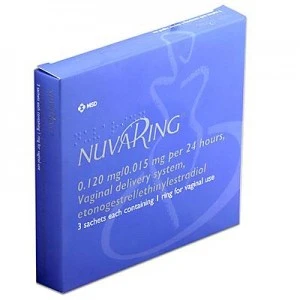
NuvaRing
$53.45
NuvaRing is a small, flexible ring placed inside the vagina, which works as a contraceptive device. It contains synthetic versions of the hormones oestrogen and progesterone, which it releases into the body to prevent pregnancy. NuvaRing is inserted into the vagina for 21 days before being removed for 7 days, making it a good alternative option to the combined pill, especially if you struggle to remember to take a daily tablet. It does not interfere with sex and is more than 99% effective when used correctly.
Delivery & Privacy
- Fast next‑day delivery to get your products as soon as possible.
- All items are packaged discreetly to maintain your privacy.
What is a NuvaRing?
NuvaRing is a small, flexible, plastic pessary device that contains two hormones: an oestrogen (ethinylestradiol) and a progestin (etonogestrel). It is inserted inside the vagina to be used as a form of contraception. Because of the amount of hormones it releases, it is considered a low-dose contraceptive, making it a suitable option if you find high doses of oestrogen difficult to tolerate.
The NuvaRing has an outer diameter of 54 mm and a cross-sectional diameter of 4 mm. It is flexible and can be manipulated to facilitate easier insertion and removal. The vaginal ring is made of transparent plastic and is safe while inside the vagina.
How Does NuvaRing Work?
NuvaRing releases 15 micrograms of ethinylestradiol and 120 micrograms of etonogestrel over the course of 24 hours.
These two hormones stop you from getting pregnant by:
- Preventing ovulation (the release of an egg cell from the ovaries)
- Increasing the thickness of vaginal fluid, making it difficult for sperm to travel to the womb
- Thinning the womb lining to stop an egg from implanting there
It’s important to note that the NuvaRing does not protect you against STIs. Only condoms can protect you from sexually transmitted infections like chlamydia and gonorrhoea.
Does NuvaRing Work Right Away?
Like the combined pill, if you insert NuvaRing on the first day of your period, known as Day One of your menstrual cycle, you will be protected from pregnancy straight away, and you do not need to use any additional contraception methods.
If you insert NuvaRing on days 2 to 5 of your period, or any day after this, you will need to use an additional contraception method, like condoms, for the first 7 days.
How Long Does NuvaRing Last?
NuvaRing remains effective for 3 weeks. It is left in place inside the vagina for 21 days before being removed for 7 days. During the 7-day break, you should have a withdrawal bleed similar to a period. On day 8, you should insert a new ring and repeat the process.
Can You Feel NuvaRing?
Many women do not feel the NuvaRing once it is in place, but this is not the case for everyone. If you feel uncomfortable, try repositioning the NuvaRing until it is comfortable. You or your partner may feel the NuvaRing during intercourse.
How Effective is the NuvaRing?
With correct use, NuvaRing is more than 99% effective at preventing unwanted pregnancies. When typical use is taken into consideration, which includes things like delayed insertion after the ring-free break or leaving the ring out of the vagina for more than 3 hours during the active 3 weeks, it is closer to being 91% effective.
That means that 9 out of 100 NuvaRing vaginal ring users will get pregnant each year. When used correctly, NuvaRing is as effective as the combined pill at preventing pregnancy.
Can You Get Pregnant on NuvaRing?
Yes, you can get pregnant on NuvaRing. No method of contraception is 100% effective at stopping you from getting pregnant, but ensuring that you use it correctly will increase the effectiveness of NuvaRing. Each year, around 9 out of 100 people will get pregnant while using NuvaRing.
Some of the factors that can increase the risk of pregnancy on NuvaRing are:
- Leaving the ring out for more than 3 hours during the active 21 days
- Starting a new ring late
- Using certain medications that interfere with NuvaRing’s active ingredients
How to Use NuvaRing Correctly
NuvaRing is inserted once a month, preferably at the beginning of your usual monthly menstrual cycle. It is removed after 3 weeks (21 days). This is followed by a 7-day ring-free break, during which time you should experience a withdrawal bleed, similar to a period. A new NuvaRing is inserted immediately after the 7-day break.
How to Insert the NuvaRing
The NuvaRing is easily inserted into your vagina yourself; no additional medical help is required. It is important to find a comfortable position and relax before inserting the ring because tensing up can make insertion more difficult. When you are ready, follow the steps below:
- Wash your hands and ensure they are clean and dry.
- Compress the ring between your thumb and index finger.
- Find a suitable and comfortable position, such as sitting, standing, or lying down.
- Insert the NuvaRing using one hand; the other hand can be used to spread the labia to make insertion easier.
- Push the NuvaRing in slowly until it is comfortable and does not cause irritation or discomfort.
- You can adjust the device’s position until it is comfortable.
- Keep NuvaRing inserted for 3 weeks.
While the NuvaRing contraceptive is in place, do not use female barrier contraception methods, such as a vaginal diaphragm, cervical cap, or female condom. That’s because NuvaRing can interfere with the correct placement of these barrier methods, but it is fine to use a male condom as an extra barrier method or to protect yourself against STIs.
How to Remove NuvaRing
After NuvaRing has been in place for 21 days, it needs to be removed for 7 days. During this break, you should have a bleed. Removing the NuvaRing is easy and pain-free. To remove NuvaRing:
- Wash your hands and ensure they are clean and dry before removing the NuvaRing.
- Use your index finger to hook the device, then gently pull it off.
- You can use your index finger and middle finger to grip it and gently remove it.
- Dispose of the NuvaRing by placing it in the provided foil package and throwing it in the bin. Do not flush the device down the toilet.
If you locate NuvaRing in your vagina, but are unable to remove it, contact your clinician. Leave the NuvaRing out for 7 days, then on day 8 insert a brand-new NuvaRing and begin the cycle again.
The NuvaRing website offers an in-depth guide to safely inserting and removing the ring.
Can I Start NuvaRing Anytime?
Yes, you can start NuvaRing at any time during your menstrual cycle if you have not used hormonal contraception in the last month and you are not already pregnant. It is best to start it on the first day of your period for immediate protection against pregnancy. If you start it after this time, you will need to use an additional method of contraception, such as male condoms, for the first 7 days.
If you have used other forms of contraception within the last month, please see the instructions below:
Starting NuvaRing After the Combined Pill
If you have used the combined pill during the last month, start using NuvaRing the day after the pill–free break of your current pill. If your combined pill also contains inactive pills, start NuvaRing on the day after the last inactive pill, at the latest.
If you have used the pill consistently and correctly and are sure you are not pregnant, you can also stop taking the pill on any day of your current pill pack and start using NuvaRing immediately.
Starting NuvaRing After the Contraceptive Patch
If you have been using the contraceptive patch in the last month, start using NuvaRing on the day following your usual patch-free break, at the latest. You should avoid extending the patch-free break beyond its recommended length.
If you have used the patch consistently and correctly and are sure you are not pregnant, you can also stop using the patch on any day and start using NuvaRing immediately.
Starting NuvaRing After the Mini Pill
You can stop taking the mini pill any day and start NuvaRing the next day, at the same time you would normally take your pill. You should also use additional contraception, such as condoms, for the first 7 days of using NuvaRing.
What if NuvaRing Falls Out?
NuvaRing can fall out or be expelled from your vagina if it has not been inserted properly, while removing a tampon, during intercourse, if you have a prolapse of the womb or during constipation. NuvaRing may still protect you from pregnancy depending on how long it has been out of the vagina.
If the ring has been out for less than 3 hours, rinse it in cool to lukewarm water, dry it, and reinsert it as soon as possible. You will still be protected against pregnancy.
If NuvaRing has been out of the vagina for more than 3 hours and you are in the 1st or 2nd week, you may not be protected against pregnancy. You should:
- Rinse the vaginal ring in cold to lukewarm water and reinsert it as soon as possible.
- Leave the ring in for at least 7 days and use male condoms if you have sex during these 7 days.
- If you are in week 1 and you had sex during the past 7 days, you may be pregnant, so contact your clinician for advice.
If NuvaRing has been out of the vagina for more than 3 hours and you are in the 3rd week, you may not be protected against pregnancy. You should throw the current ring away and do one of the following:
1.) Insert a new ring immediately and continue the 21-day course. You may not have a period, but you may experience spotting or bleeding,
OR;
2.) Do not insert the ring again. Wait until your period, then insert a new ring no later than 7 days after the previous ring was removed or fell out. You should choose this option only if you have used NuvaRing continuously for the past 7 days.
If you do not know how long NuvaRing has been out for, you should take a pregnancy test and speak to a clinician before inserting a new NuvaRing contraceptive.
Coming Off NuvaRing Safely
You can stop using NuvaRing at any time; you do not need to wait the full 21 days or go through a weaning-off period. If you do not want to get pregnant, you should discuss another method of birth control with your clinician.
If you want to get pregnant when you stop NuvaRing, you should wait until you have a natural period before trying to conceive. This will help accurately calculate when your baby will be due, but it will not cause you or your baby harm if you get pregnant before your first period after NuvaRing.
NuvaRing Side Effects and Cautions
NuvaRing can cause side effects, though not everyone will experience them. Familiarising yourself with the potential side effects, including more serious types such as blood clots and cancer, will give you a better idea of what to look out for and help you monitor how your body responds to the active ingredients.
Side Effects of NuvaRing
NuvaRing side effects are often mild and tend to improve as your body adjusts to the hormonal changes. If you get any side effects that concern you, do not improve, or are severe, contact your clinician for advice.
Potential side effects of NuvaRing include:
| Common Side Effects (may affect up to 1 in 10 people) |
Uncommon Side Effects (may affect up to 1 in 100 people) |
Rare Side Effects (may affect up to 1 in 1,000 people) |
|---|---|---|
| Abdominal pain Feeling sick (nausea) Vaginal yeast infection (thrush) Vaginal discomfort Genital itching Vaginal discharge Headache or migraine Depressive moods Lower sex drive Breast pain Pelvic pain Painful periods Acne Weight gain The ring falling out |
Disturbed vision Dizziness Swollen abdomen Vomiting Diarrhoea Constipation Feeling tired, unwell, or irritable Mood changes or swings Fluid retention Bladder or urinary tract infection Painful urination, a strong desire to pass urine, or passing more urine than usual Pain or bleeding during sex Increased blood pressure Increased appetite Back pain Muscle spasms Leg or arm pain Less sensitive skin Sore or enlarged breasts Inflamed cervix Changes to your periods Vaginal infection Hair loss Hives |
Harmful blood clots in a vein or artery in a leg or foot, or the lungs Heart attack Stroke Mini stroke or temporary stroke-like symptoms Blood clots in the liver, stomach/intestine, or eye |
This is not an exhaustive list of potential NuvaRing side effects. If you’d like more information, including a comprehensive list of side effects, please read the Patient Information Leaflet that comes with the treatment.
NuvaRing Risk of Blood Clots
Combined hormonal contraceptives, including NuvaRing, increase the risk of developing a blood clot compared to not using one.
Common signs of a blood clot include:
- Coughing up blood
- Sudden, severe headache
- Weakness or numbness down one side of the body
- Chest pain, pressure, or discomfort
- Rapid breathing or breathlessness
- Swelling and redness in one leg
The potential risks of developing a blood clot while using NuvaRing are shown in the table below:
| Category | The risk of developing a blood clot in a year |
|---|---|
| Women who are not using a combined hormonal pill/patch/ring and are not pregnant | About 2 out of 10,000 people |
| Women using a combined hormonal contraceptive pill containing levonorgestrel, norethisterone or norgestimate | About 5 to 7 out of 10,000 people |
| Women using NuvaRing | About 6 to 12 out of 10,000 people |
The overall risk of developing a blood clot while using NuvaRing is still low, but it is highest during the first year of using it for the first time or if you restart combined contraception after a break of 4 weeks or more. The risk also increases if you:
- Are overweight
- Have an immediate family member who has had a blood clot in their leg, lung, or other organ
- Need an operation or are going to be off your feet for a while
- Are over 35
- Gave birth less than 3 weeks ago
- Are travelling by plane
When you stop using NuvaRing, your risk returns to normal within a few weeks. If you are concerned about blood clots while using NuvaRing, you should speak to your clinician.
NuvaRing and Breast Cancer
Although breast cancer has been detected in more women who use combined contraceptives, such as NuvaRing, it is not known if this is caused by the treatments themselves or because individuals using these medications are examined more often, making it more common to spot the condition.
If you are concerned about the risk of breast cancer or you have a family history of the condition, it is important that you discuss this during your consultation with a clinician.
NuvaRing Interactions and Warnings
NuvaRing may not be suitable for everyone because certain health conditions and medications can interact with etonogestrel and ethinylestradiol, reducing its effectiveness. This is why a consultation with a clinician is crucial before you start NuvRing, so that they can check it is safe for you to use.
Do not use NuvaRing if you:
- Have or have ever had a blood clot in a blood vessel of your legs, lungs, or other organs
- Have a blood-clotting disorder
- Need an operation or are going to be off your feet for a while
- Have ever had a heart attack or stroke
- Have or have ever had angina pectoris or a transient ischaemic attack (TIA)
- Have any diseases that increase the risk of a blood clot in an artery
- Have ever had a migraine with aura
- Have had an inflamed pancreas (pancreatitis) associated with high levels of fat in your blood
- Have had severe liver disease, and your liver is not yet working normally
- Have had a benign or malignant liver tumour
- Have had or may have breast cancer or cancer of the genital organs
- Have any unexplained vaginal bleeding
- Are allergic to ethinylestradiol, etonogestrel, or any other ingredient listed in the medication
Some oral combined contraceptives contain lactose, but NuvaRing does not, making it a potential option for people with certain sugar intolerances. Speak to your clinician before starting any new medication.
NuvaRing and Other Medications
NuvaRing releases hormones into the bloodstream. This could cause negative interactions when using NuvaRing alongside other medications. It is important to inform the clinician of any prescribed, over-the-counter, or herbal medications you are taking during your consultation.
Do not use NuvaRing if you have hepatitis C and are taking any medicines that contain ombitasvir/paritaprevir/ritonavir and dasabuvir or glecaprevir/pibrentasvir.
Inform our prescriber if you are taking any of the following:
- Anti-epileptics, including primidone, phenytoin, barbiturates, carbamazepine, oxcarbazepine, topiramate, and felbamate
- St John’s Wort
- Rifampicin antibiotics
- Ritonavir, nelfinavir, nevirapine, or efavirenz for HIV
- Medications for hepatitis C
- Griseofulvin for infectious diseases
- Bosentan for high blood pressure in the lungs
If you are taking any medications that can make NuvaRing less effective, you should also use a barrier method, such as male condoms, each time you have sex. The effects of other medications on NuvaRing can last up to 28 days, so you will need to use condoms for 28 days after stopping the medication.
NuvaRing may also influence the effect of:
- Ciclosporin
- Lamotrigine
Speak to your clinician if you are worried about taking other medications and NuvaRing.
Pregnancy and Breastfeeding
NuvaRing is not suitable for use during pregnancy, so if you are or think you might be pregnant, do not use it. If you become pregnant while using NuvaRing, you should remove the ring and contact your clinician.
NuvaRing is not usually recommended for use during breastfeeding. Speak to a clinician about a suitable alternative to use during breastfeeding.
Frequently Asked Questions About NuvaRing
Are an IUD and NuvaRing the Same Thing?
No, an IUD and NuvaRing are not the same thing. Both are effective and reversible methods of birth control, but an IUD is a T-shaped device that is inserted into your uterus by a doctor or nurse and releases copper.
The IUD is a non-hormonal type of contraception and can last for 5 to 10 years. The IUS is a similar device that releases progesterone into the womb. NuvaRing is a flexible vaginal ring that you can insert yourself and releases synthetic versions of oestrogen and progesterone into the womb for 21 days.
Is the NuvaRing Vaginal Ring a Combined Hormonal Contraceptive?
Will NuvaRing Dissolve?
Can I Use Tampons with NuvaRing?
Can the NuvaRing Get Lost Inside You?
What Should I Do if NuvaRing Breaks?
It is very rare for NuvaRing to break, but if it does, throw it away and start with a new ring straight away. You should use extra contraception, such as condoms, for the next 7 days. If you had sex before you realised the ring had broken, you should contact your doctor for advice.
Sometimes a NuvaRing breakage can cause vaginal injury. If this happens, you should see a doctor.
What to Do if I Am Bleeding on NuvaRing?
Can NuvaRing Stop Your Period?
Can NuvaRing Cause Depression?
Can NuvaRing Cause UTIs?
Yes, NuvaRing can cause or increase the risk of urinary tract infections, but it is listed as an uncommon side effect. The ring can alter the natural vaginal flora and raise pH levels, allowing bacteria to thrive and leading to a UTI.
UTIs (such as cystitis) are easily treatable with antibiotics, and you can help prevent them by always wiping from front to back after using the toilet and by staying hydrated.
Does NuvaRing Cause Weight Gain?
Although weight gain is listed as a common NuvaRing side effect in the patient information leaflet, there is no solid medical evidence suggesting that combined contraceptives cause you to gain weight. One study found that there was little weight change in people who used an oral contraceptive or a vaginal ring for 3 months.
Weight gain can be caused by increased fluid retention and changes in appetite rather than by an accumulation of body fat. If you are concerned about NuvaRing side effects, speak to a clinician. We can also help if you need support with weight loss.
Can I Buy NuvaRing Over the Counter?
Can You Buy NuvaRing Online?
How Do I Store NuvaRing?
NuvaRing should be stored below 30 °C (room temperature) and used within 4 months. Always check the expiration date on the packaging before using the device, and do not use it beyond this point. Store medicines out of the sight and reach of children and pets.
Never throw away medicine via household or water waste. Take any unused or expired medicine to your pharmacy so they can dispose of it safely on your behalf.
Related products




Reviews
There are no reviews yet.