

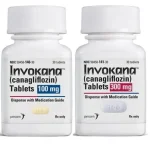
Invokamet
$162.99 $464.99Price range: $162.99 through $464.99
Delivery & Privacy
- Fast next‑day delivery to get your products as soon as possible.
- All items are packaged discreetly to maintain your privacy.
What is Invokamet?
Invokamet is an oral combination antidiabetic medication containing two drugs, canagliflozin and metformin. Invokamet has a few indications, including:
- Improving glycemic control in adults with type 2 diabetes mellitus (T2DM) in addition to diet and exercise
- Decreasing the risk of serious cardiovascular events (e.g. death, myocardial infarction, stroke) in adults with T2DM and cardiovascular disease (CVD)
- Decreasing the risk of developing end-stage kidney disease (ESKD), serum creatinine doubling, death from cardiovascular causes, and hospitalization for heart failure in adults with T2DM and diabetic nephropathy with albuminuria over 300 mg/day
Controlling hyperglycemia prevents downstream complications such as kidney damage, loss of limbs, blindness, heart attack, stroke, or nerve problems. Cardiovascular and renal events in diabetes can also be detrimental. Invokamet is not indicated for the treatment of type 1 diabetes.
How does Invokamet work?
Canagliflozin is a sodium-glucose co-transporter 2 (SGLT2) inhibitor. SGLT2 is a transporter that reabsorbs filtered glucose in the proximal renal tubules. Invokamet inhibits SGLT2, decreasing renal reabsorption of glucose and lessening the renal glucose threshold, which elevates the amount of glucose excreted into the urine. By preventing SGLT2-dependent reabsorption of glucose and sodium, Invokamet also increases the amount of sodium getting to the distal tubule. This elevates tubuloglomerular feedback and decreases intraglomerular pressure. Metformin is a biguanide that lowers the production of hepatic glucose, lowers absorption of glucose in the intestine, and improves insulin sensitivity through increasing peripheral glucose. Insulin release does not change with metformin, however, fasting levels of insulin and day-long plasma insulin response can be lowered.
Warnings and Precautions
Lower Limb Amputation
In clinical trials, there was a higher risk of lower limb amputations in the group treated with canagliflozin compared to the group who received the placebo. This risk occurred at both the 100 mg and 300 mg doses. The most common amputations were those of the toe and midfoot, however, amputations of the leg also occurred. A few patients also had to undergo multiple amputations.
Patients with a history of previous amputation, peripheral vascular disease, diabetic foot ulcers, or neuropathy should use caution when starting Invokamet. Patients should be counseled on preventative foot care and common signs of infection. If patients experience symptoms of infection, pain, ulcers, or sores in the lower limbs, Invokamet should be stopped.
Volume Depletion
Canagliflozin has been known to cause intravascular volume contraction which presents as hypotension or short-term changes to creatinine. Volume depletion has been shown to cause acute kidney injury (AKI) resulting in hospitalization and sometimes dialysis. Invokamet should be used with caution in patients with eGFR of less than 60 mL/min/1.73 m2, elderly patients, or patients taking loop diuretics. These patients could have an elevated risk of developing hypotension and volume depletion. Providers should monitor patients for signs of volume depletion throughout treatment with Invokamet.
Ketoacidosis
Canagliflozin has been reported to cause ketoacidosis. Ketoacidosis is a severe, life-threatening event that needs immediate hospitalization and could be fatal. The risk of developing ketoacidosis is elevated with higher doses of SGLT2 inhibitors such as Invokamet.
Patients with symptoms associated with metabolic acidosis should be evaluated for the possibility of ketoacidosis without regard to blood glucose levels. Ketoacidosis can still be present despite blood glucose levels less than 250 mg/dL. Symptoms include signs of dehydration and metabolic acidosis, such as vomiting, nausea, malaise, shortness of breath, and abdominal pain. If suspected, Invokamet should be stopped, and the patient should be assessed and treated appropriately with insulin, carbohydrate replacement, and fluid.
A patient’s history should be evaluated before starting Invokamet, as pancreatic insulin deficiency, caloric restriction, and alcohol abuse could predispose an individual to ketoacidosis. Patients undergoing surgery should stop Invokamet 3 days before surgery. If patients anticipate a clinical situation known to cause ketoacidosis, such as surgery or prolonged fasting, providers should consider stopping Invokamet.
Hypoglycemia with Concomitant Use of Insulin Products
Invokamet can cause hypoglycemia when used in combination with other products that lower blood glucose, such as insulin. Dose adjustments to insulin may be required to prevent the development of hypoglycemia. Patients should be counseled on common signs and symptoms of hypoglycemia.
Necrotizing Fasciitis of the Perineum (Fournier’s Gangrene)
Necrotizing fasciitis of the perineum, also known as Fournier’s gangrene, is a rare but potentially fatal infection that requires immediate intervention with surgery. Occurrences can result in hospitalization, surgeries, and death. Patients should be aware of the signs and symptoms associated with necrotizing fasciitis, such as pain, erythema, tenderness, or swelling of the genital or perineal area. Symptoms can also include malaise or fever.
If necrotizing fasciitis is suspected, providers usually treat the infection with broad-spectrum antibiotics and possibly surgical debridement. Invokamet should be stopped and blood glucose levels should be monitored.
Genital Mycotic Infections
Canagliflozin has been shown to elevate the risk of genital mycotic infections. Patients who have had genital mycotic infections in the past or who are uncircumcised males have a higher likelihood of developing genital mycotic infections. If suspected, providers should monitor and treat the patient appropriately.
Hypersensitivity Reactions
Canagliflozin has been shown to cause severe hypersensitivity reactions, including anaphylaxis and angioedema, within hours or days of starting therapy. If anaphylaxis or angioedema should occur, Invokamet should be stopped and the patient should seek medical attention.
Bone Fracture
Patients have an elevated risk of bone fracture after starting canagliflozin. This risk can be increased as early as 12 weeks after starting treatment. Providers should assess a patient’s risk factors for developing a fracture before starting Invokamet.
Drug Interactions
Carbonic Anhydrase Inhibitors (CAI)
Carbonic anhydrase inhibitors can lower serum bicarbonate and cause non-anion gap metabolic acidosis. When used concomitantly with metformin, this combination can elevate an individual’s risk of developing lactic acidosis. Patients who are taking these drugs in combination should be frequently monitored. Examples of CAIs include topiramate and acetazolamide.
Alcohol
Patients should avoid excessive alcohol intake. Alcohol has been shown to increase metformin’s effect on lactate metabolism, causing an increased risk for lactic acidosis.
UGT Enzyme Inducers
UGT inducers include drugs such as rifampin, ritonavir, phenobarbital, and phenytoin. Patients on UGT inducers with an eGFR of less than 60 mL/min/1.73 m2 may require an increased dose of Invokamet to 200 mg daily if tolerated.
Digoxin
When co-administered with digoxin, Invokamet has been shown to increase digoxin concentrations. Use caution when taking concomitantly and monitor appropriately to avoid digoxin toxicity.
Positive Urine Glucose Test
SGLT2 inhibitors such as Invokamet can elevate glucose excretion in the urine. This phenomenon will cause positive urine glucose tests if administered. Therefore, do not use urine glucose tests to monitor glycemic control in patients taking Invokamet.
Interference with 1,5-anhydroglucitol (1,5-AG) Assay
The 1,5-AG assay is not a reliable form of glycemic control monitoring in patients taking Invokamet. Other methods should be implemented to monitor glucose control in patients taking SGLT2 inhibitors.
Frequently Asked Questions
Disclaimer
Buy Insulin, shares medical information to support your understanding of medications and related health conditions. This content is intended for educational purposes only and should not be considered a substitute for professional medical advice. Always consult with your doctor or pharmacist before beginning or adjusting any prescription. Our trusted pharmacy partners adhere to the strict safety standards established by their respective health authorities to ensure you receive safe, high-quality medications.
| Choose an option | 50mg/1000m (60 tables) – $162.99, 50mg/1000m (120 tables) – $317.99, 50mg/1000m (180 tables) – $464.99 |
|---|




Reviews
There are no reviews yet.